
Garage Door Spring Repair in Sitka, Alaska
In Sitka, Alaska, the question that decides a spring job is how the door's springs have been wearing, and the answer depends on the deep cold, freeze-thaw, and heated garages pattern that runs across the state. As the fifth-largest city in the state, the city mixes older and newer garages, and the springs on those doors reach their cycle rating at very different speeds depending on whether the garage is the main entrance or is rarely opened.
Call (877) 318-0816 — Same-Day Service Within 24 Hours in Sitka
Local conditions in Sitka
- Anchorage and Fairbanks homes commonly have insulated, heavy doors to keep heat in, and those heavier doors need stronger springs than a light uninsulated door in a milder state.
- Detached garages that are left unheated through winter put the harshest load on springs and cables alike.
- Winter use in Alaska is often brief but essential — the car must get out in snow — so a spring failure in January is a household emergency even when the door has not cycled many times that month.
- Cold binding, a door that opens a few inches and stops in deep cold, and cables that go slack after a freeze are the Alaska pattern, and they should not be mistaken for a simple opener fault.
What high-cycle spring upgrade involves
One cycle is one open plus one close.
Households where the garage is the main entrance, homes with teenagers or shift workers coming and going all day, and rental or multi-user properties all burn cycles fast.
A high-cycle spring still needs the same sizing, balance test, and cable and drum inspection as a standard spring.
High-Cycle Spring Upgrade — full service page
Symptoms to watch
The most telling sign here is springs that reach their cycle rating early because the garage is the main entrance. One cycle is one open plus one close. If the door suddenly feels heavy, makes a loud bang, or shows a gap in a coil, stop using it, keep people and cars clear, and do not force it with the opener.
What to check first
- Check that extension springs still have a safety cable through the centre of each spring, because a door should never run without that cable in place.
- Test the safety-reverse function after any spring work, so the door stops and reverses if it meets an obstruction.
- Check rollers, hinges, and bearings for dryness and grit before blaming the spring for every noise.
- Check that both springs on a two-spring door match each other, because a mismatched pair lifts the door unevenly.
Questions people ask about garage door springs
Why replace both springs when only one broke?
On a two-spring door both springs have shared every open and close since they were fitted, so the surviving spring has already used up almost the same number of cycles. Replacing only the broken one leaves a new spring working beside a tired one, and that mismatch is a common cause of uneven lift and a second breakdown weeks later.
What is the difference between torsion and extension springs?
A torsion spring sits on a shaft above the door and twists to store energy, while extension springs run along the side tracks and stretch as the door closes. Torsion systems generally lift more evenly because one shaft drives both sides together, while extension systems need a safety cable through each spring because a snapped extension spring can whip.
Why does my door lift crookedly?
A door that lifts with one side higher than the other is lifting unevenly, which can mean a spring mismatch, pulley wear, or cable slack rather than an opener fault. An extension system only lifts evenly when both sides pull together, so the cause has to be found before the door is forced again.
Service promise: For garage door spring help in Sitka, Alaska, call (877) 318-0816 for same-day service — service within 24 hours, and the address on file is Florida Garage Door Company, 274 S Military Trail, Deerfield Beach, FL 33442.
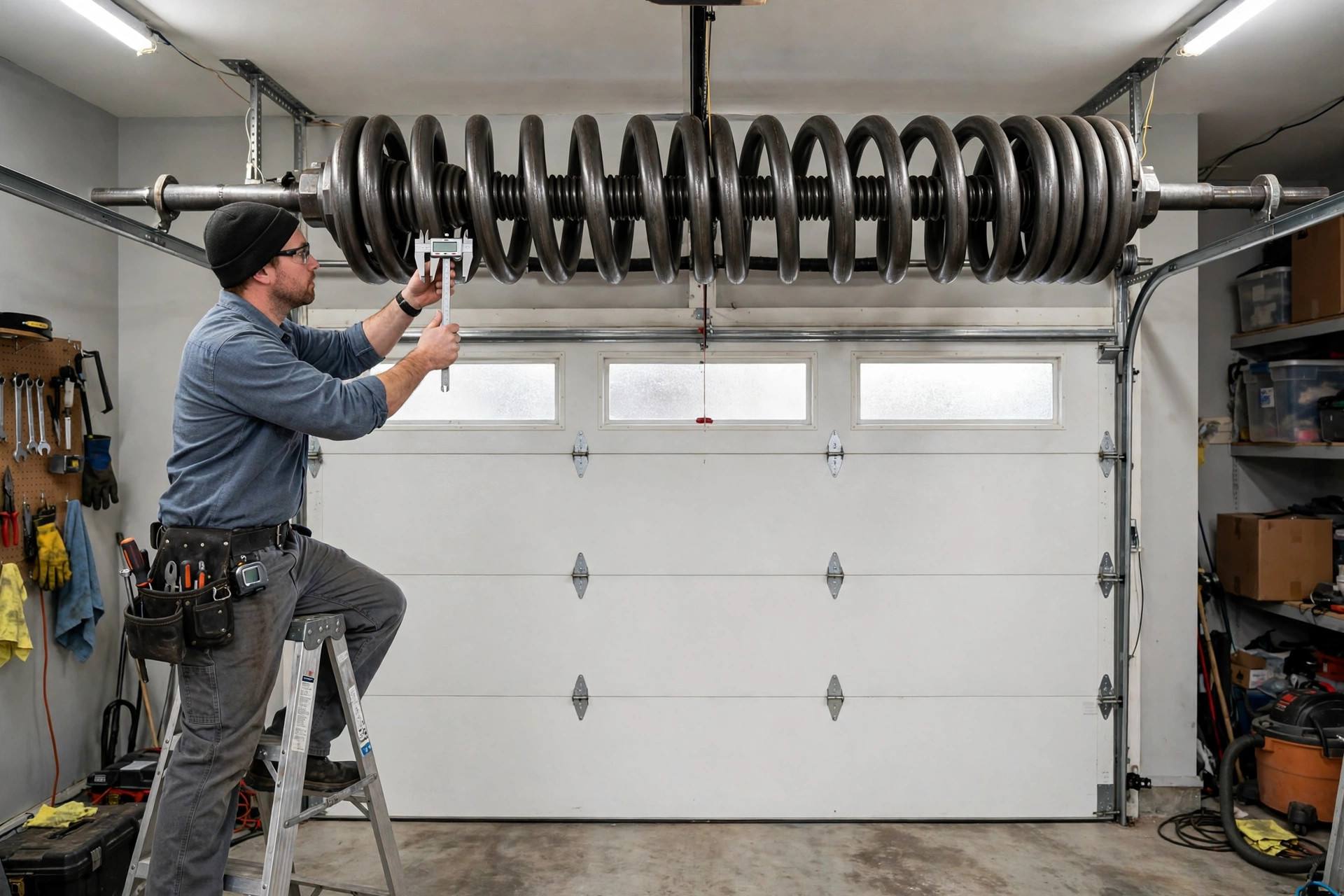
Photos on this page are representative images, not verified photos of this business's own jobs.
Spring services most relevant here
- High-Cycle Spring Upgrade
- Spring-Linked Cable Drum and Bearing Replacement
- Extension to Torsion Conversion