
Garage Door Spring Repair in South Burlington, Vermont
Spring help in South Burlington, Vermont starts by separating a spring fault from the parts that work with the spring: cables, drums, bearings, and the opener itself. The long winters and rural detached garages pattern across the state sets the wear, and as the second-largest city in the state the city has a wide mix of door ages and types, so a diagnosis that skips the cables and the balance test is guesswork, not a repair plan.
Call (877) 318-0816 — Same-Day Service Within 24 Hours in South Burlington
Local conditions in South Burlington
- Vermont homes commonly have insulated doors for winter, beside older single doors in historic towns and larger rural garage doors.
- Vermont's insulated doors are heavier and need stronger springs, while its older doors often carry extension springs whose safety cables need checking.
- Vermont garages are winter exits, so a spring failure in a snowstorm blocks the car at the worst moment, and the long winter means a door that binds in January has often been weakening since the first freeze.
- Long-winter binding, detached-garage cold, and older extension-spring wear are the Vermont pattern.
What broken extension spring replacement involves
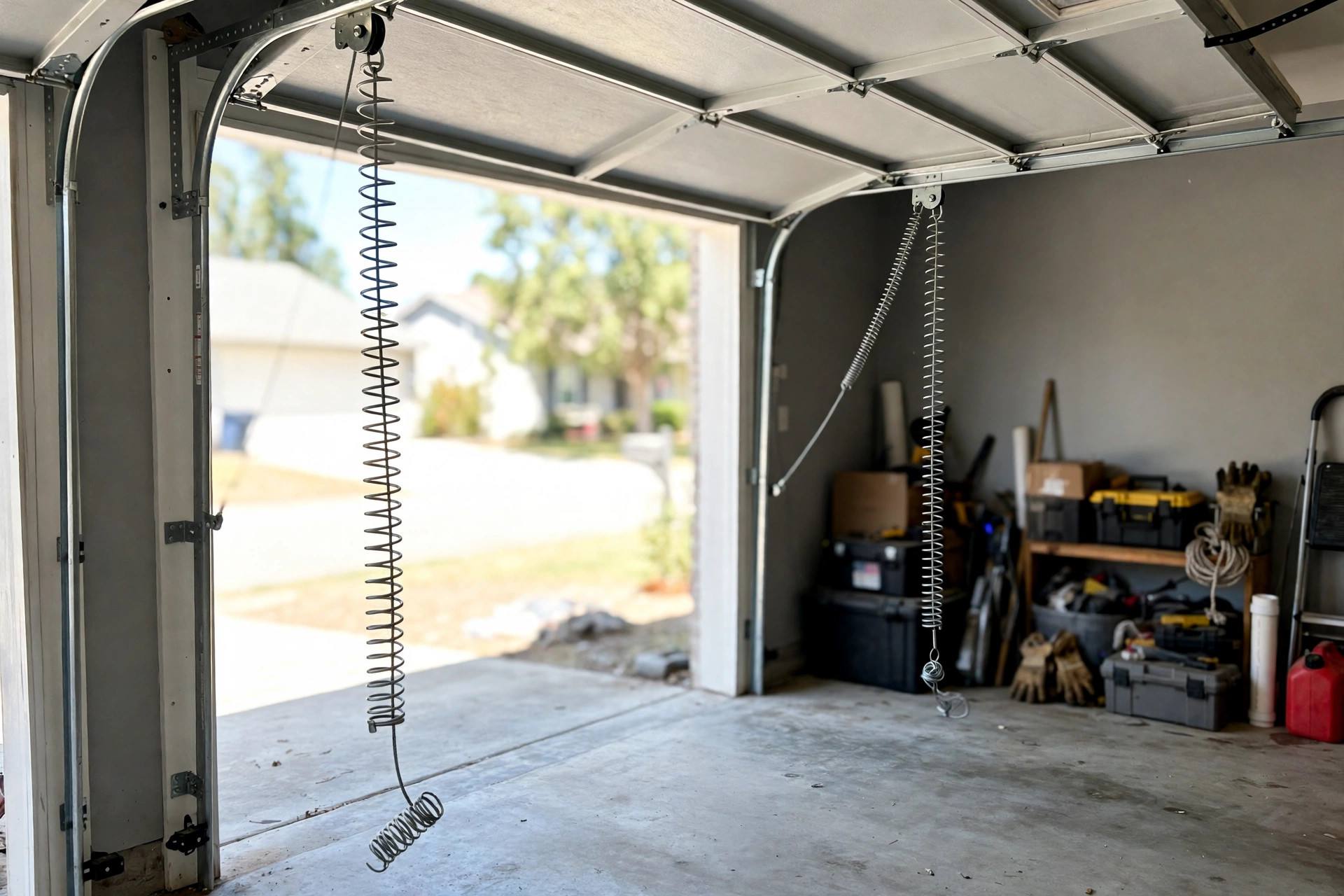
Extension springs run along the side tracks and stretch as the door closes, then contract to help lift it.
Extension springs are matched by weight rating, length, and door size, and the pair must match each other so the door lifts evenly.
The technician secures the door, releases tension safely, and replaces the failed spring together with its safety cable if the cable is frayed, kinked, or missing.
Broken Extension Spring Replacement — full service page
Symptoms to watch
The most telling sign here is a door that drops on one side or lifts crookedly. Extension springs run along the side tracks and stretch as the door closes, then contract to help lift it. If the door suddenly feels heavy, makes a loud bang, or shows a gap in a coil, stop using it, keep people and cars clear, and do not force it with the opener.
What to check first
- Check whether the door closes without slamming and stays open halfway, which is the quick sign of lost tension.
- Check headroom above the door before discussing a torsion conversion, since a low opening may not fit a shaft system.
- Look for a visible gap in a coil, rust or pitting on the springs, and slack or frayed cables before using the opener again.
- Check whether insulation or a heavier panel has outgrown the original spring rating.
Questions people ask about garage door springs
What is the balance test, and what does it tell me?
Disconnect the opener, lift the door by hand to waist height, and let go. A balanced door stays roughly where you leave it, while a door that falls, rises on its own, or needs real effort to move has a spring or balance problem that tension work should address.
Is spring replacement dangerous to do myself?
Yes. A spring counterbalances a door that sources put at roughly 130 to 400 pounds, and that weight's worth of energy is stored in the spring under tension even when the door is closed. Safe homeowner checks are the balance test, the safety-reverse test, a photo-eye check, lubrication, and visual checks; winding, unwinding, or adjusting tension belongs to a trained technician.
When is extension-to-torsion conversion worth discussing?
Conversion is worth discussing for older extension doors that keep breaking springs, doors where safety cables are missing or repeatedly damaged, and heavier doors that extension springs struggle to lift evenly. It needs enough headroom above the opening, one source cites a 12-inch minimum, and the door must be re-measured and re-balanced as a torsion door.
Service promise: For garage door spring help in South Burlington, Vermont, call (877) 318-0816 for same-day service — service within 24 hours, and the address on file is Florida Garage Door Company, 274 S Military Trail, Deerfield Beach, FL 33442.
Photos on this page are representative images, not verified photos of this business's own jobs.